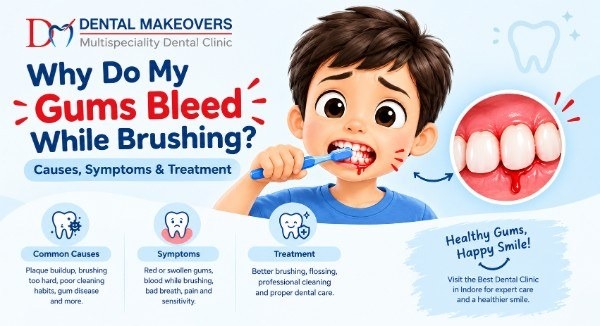
Have you ever noticed blood on your toothbrush while brushing your teeth? Or do your gums bleed when you eat something hard?
Many people think bleeding gums are normal. Some people even stop brushing the area because they feel it may cause more bleeding.
But healthy gums should not bleed regularly.
Bleeding gums can be an early sign that something is wrong with your gums. The good news is that many gum problems can be treated when they are found early.
If you are searching for the Best Dental Clinic in Indore, understanding the reason behind bleeding gums can help you take better care of your teeth and gums.
Let’s understand why gums bleed, what signs you should notice, and how you can keep your gums healthy.
What Are Bleeding Gums?
Your gums are the soft pink tissues around your teeth. They help hold your teeth in place and protect the roots.
Healthy gums are usually firm and do not bleed easily.
But when germs and dirt collect around your teeth, your gums may become red, swollen, and weak.
This can make your gums bleed when you brush, floss, or eat hard foods.
The most common reason for bleeding gums is gum inflammation caused by plaque buildup.
Why Do My Gums Bleed While Brushing?
There can be different reasons for bleeding gums. Sometimes the problem is simple, but sometimes it needs proper dental treatment.
1. Plaque Buildup on Your Teeth
Plaque is a sticky layer that forms on your teeth every day.
It contains germs that can irritate your gums.
When you do not clean your teeth properly, plaque starts collecting near the gum line. Your gums may become red, swollen, and sensitive.
Change block type or style
Move Heading block from position 16 up to position 15
Move Heading block from position 16 down to position 17
Change alignment
This condition is called gingivitis.
Gingivitis is an early stage of gum disease. It can often improve with proper brushing, cleaning between teeth, and professional dental care.
more keyword add
If you are looking for the Best Dental Clinic in Indore, choosing a dental clinic that focuses on your oral health, comfort, and personalised dental care can help you make an informed decision.
Change block type or style
Move Paragraph block from position 27 up to position 26
Move Paragraph block from position 27 down to position 28
Change alignment
Change text alignment
Displays more block tools
2. Brushing Your Teeth Too Hard
Do you brush your teeth with too much pressure?
Many people think brushing harder will make their teeth cleaner.
But brushing too hard can hurt your gums.
Using a hard toothbrush or pushing the brush strongly against your gums may cause irritation and bleeding.
The better way is to use a soft toothbrush and clean your teeth gently.
You do not need to hurt your gums to keep your teeth clean.
3. Not Brushing Your Teeth Properly
Skipping brushing or cleaning your teeth only once a day can allow plaque to build up.
When plaque stays on your teeth for a long time, it can irritate your gums.
This may cause bleeding, bad breath, and swelling.
Regular brushing helps remove plaque before it causes bigger problems.
4. Not Cleaning Between Your Teeth
Your toothbrush cannot reach every small space between your teeth.
Food particles and plaque can stay in these spaces.
Over time, the gums between your teeth may become irritated and start bleeding.
Cleaning between your teeth with floss or suitable interdental brushes can help remove plaque from these areas.
5. Gum Disease
Gum disease is one of the main reasons people experience bleeding gums.
In the beginning, gums may become red, swollen, and bleed during brushing.
If the problem is ignored, gum disease can become more serious.
In advanced cases, the tissues and bone that support your teeth may become damaged. This can lead to loose teeth and even tooth loss.
That is why regular dental check-ups are important.
What Are the Common Symptoms of Bleeding Gums?
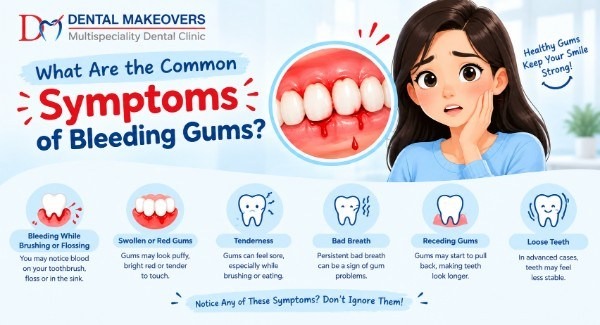
Bleeding gums may happen along with other signs.
You should pay attention if you notice:
- Red or swollen gums
- Blood while brushing or flossing
- Pain or tenderness in your gums
- Bad breath that does not go away
- A bad taste in your mouth
- Gums moving away from your teeth
- Teeth feeling loose
- Pain while chewing food
These symptoms may be signs of gum disease or another dental problem.
If you notice these changes, visit a dentist for a proper check-up.
How Can You Stop Your Gums From Bleeding?
The first step is to understand why your gums are bleeding.
If plaque buildup is the reason, improving your daily oral care can help.
Here are some simple habits you can follow:
- Brush your teeth twice a day with a soft toothbrush.
- Use fluoride toothpaste to help protect your teeth.
- Brush gently near your gum line.
- Clean between your teeth every day.
- Avoid eating too many sugary snacks.
- Drink enough water throughout the day.
- Visit your dentist for regular check-ups.
- Do not ignore bleeding, swelling, or gum pain.
Remember: Do not stop brushing your teeth just because your gums bleed. Gentle cleaning helps remove plaque. If bleeding continues, get your gums checked by a dentist.
Can Bleeding Gums Be a Sign of Serious Problems?
Yes, sometimes bleeding gums can be a sign of a bigger dental problem.
If gum inflammation is not treated, it may affect the tissues and bone that support your teeth.
You may notice that your gums look smaller, your teeth appear longer, or your teeth feel loose.
Some people also experience pain while chewing.
These signs should not be ignored. Best Dental Clinic in Indore
Other factors, such as pregnancy, diabetes, smoking, and certain medicines, can also affect gum health.
If your gums bleed regularly, your dentist can check the cause and suggest the right treatment.
What Treatment Is Available for Bleeding Gums?
Treatment depends on the reason your gums are bleeding.
If the problem is caused by plaque, your dentist may recommend improving your brushing and cleaning routine.
If hard deposits called tartar have formed, professional cleaning may be needed.
Tartar cannot be removed completely with a regular toothbrush. It needs to be removed by a dental professional.
For more serious gum disease, your dentist may recommend deeper cleaning or other treatment based on your condition.
The aim is to reduce gum inflammation, control infection, and protect the teeth.
When Should You Visit a Dentist?

You should not wait until your gums become very painful. Visit a dentist if your gums bleed regularly, feel swollen, or become painful. You should also get checked if you notice bad breath that does not improve, loose teeth, or gums moving away from your teeth.
If you have severe swelling, heavy bleeding, or a loose tooth, seek dental care promptly.
At Dental Makeovers, Indore, Dr. Shikha Gupta (BDS) has over 15 years of clinical experience in dental care. She focuses on understanding patients’ dental problems, explaining treatment options, and helping them feel comfortable during their visit.
If you are looking for the Best Dental Clinic in Indore, Dental Makeovers provides dental services including gum care, deep cleaning, root canal treatment, dental implants, crowns, braces, and other dental treatments.
Early care can help prevent gum problems from becoming more serious.
Dr. Shikha Gupta – Dental Makeovers
📍 61 Bima Nagar, Near Saket Square, Indore, MP 452018
📞 +91 91118 88225 | 0731-4955348
🌐 Visit Website: https://dental-makeovers.com/
Book your dental appointment today and take care of your smile!
How to Keep Your Gums Healthy Every Day
Healthy gums need daily care.
Brush your teeth in the morning and before going to bed.
Clean all sides of your teeth gently.
Do not forget the small spaces between your teeth.
Try to reduce frequent sugary snacks and drinks.
If you smoke, ask your healthcare professional about support to stop smoking.
Most importantly, do not ignore small changes in your gums.
A little bleeding today may be a sign that your gums need more care.
Conclusion
Bleeding gums while brushing is common, but it should not be treated as normal.
The most common reason is plaque buildup, which can irritate your gums and cause inflammation.
Brushing gently, cleaning between your teeth, and visiting your dentist regularly can help keep your gums healthy.
If your gums continue to bleed, do not wait for the problem to become painful.
Visit the Best Dental Clinic in Indore for a proper dental examination and guidance.
Taking care of your gums today can help protect your teeth and keep your smile healthy for years.
FAQs
1. Why do my gums bleed when I brush my teeth?
Your gums may bleed because plaque has collected around your teeth and irritated them. Brushing too hard or using a hard toothbrush can also cause bleeding.
2. Should I stop brushing if my gums bleed?
No. Brush gently with a soft toothbrush. Stopping brushing can allow more plaque to collect. If bleeding continues, visit your dentist.
3. Can bleeding gums become serious?
Yes. If gum disease is not treated, it can damage the tissues and bone supporting your teeth. In advanced cases, teeth may become loose.
4. How can I prevent bleeding gums?
Brush twice a day, clean between your teeth daily, use a soft toothbrush, limit sugary snacks, and visit your dentist regularly.
5. When should I visit a dentist for bleeding gums?
Visit your dentist if your gums bleed regularly, become swollen or painful, or if you notice bad breath, loose teeth, or gums moving away from your teeth.